

Tesamorelin is a synthetic peptide that has attracted significant scientific interest due to its relationship with Growth Hormone Releasing Hormone (GHRH) signalling pathways. As one of the most widely studied peptides within growth hormone-related research, Tesamorelin continues to be investigated for its interactions with endocrine and metabolic systems.
Its unique mechanism of action differentiates it from many other peptide compounds and has contributed to extensive scientific literature examining growth hormone regulation and physiological signalling processes.
This article explores the scientific background of Tesamorelin, its structure, mechanism and why it remains an important area of peptide research.
What Is Tesamorelin?
Tesamorelin is a synthetic peptide analogue of naturally occurring Growth Hormone Releasing Hormone (GHRH).
GHRH is produced within the hypothalamus and plays an important role in regulating growth hormone signalling through interactions with the pituitary gland.
Tesamorelin was engineered to mimic specific biological characteristics of endogenous GHRH while improving stability within biological systems.
Understanding GHRH
Growth Hormone Releasing Hormone (GHRH) is a naturally occurring peptide hormone responsible for stimulating growth hormone secretion through specific receptor pathways.
Researchers have investigated GHRH signalling in relation to:
- Endocrine regulation
- Growth hormone pathways
- Metabolic processes
- Cellular signalling
- Hormonal communication networks
Tesamorelin functions as a GHRH analogue, making it an important compound within this area of research.
How Tesamorelin Differs From Other Peptides
Many research peptides are classified according to their biological targets.
Tesamorelin is unique because it belongs to a category known as:
Growth Hormone Releasing Hormone Analogues
Rather than acting directly on growth hormone itself, Tesamorelin interacts with upstream signalling pathways associated with GHRH receptor activation.
This distinction has made it an important compound within endocrine-related peptide research.
Why Tesamorelin Has Generated Scientific Interest
Tesamorelin has been investigated extensively due to its involvement in:
- Growth hormone signalling pathways
- Endocrine system regulation
- Metabolic research
- Hormonal communication mechanisms
- Peptide-based therapeutic development
Its well-characterised mechanism has resulted in a substantial body of scientific literature compared with many newer investigational peptides.
Peptide Structure & Stability
Tesamorelin is composed of a specific amino acid sequence designed to maintain biological activity while improving stability characteristics.
Researchers commonly investigate:
- Receptor binding behaviour
- Molecular stability
- Peptide degradation pathways
- Pharmacological properties
- Structural integrity
As with many advanced peptides, stability remains an important area of ongoing investigation.
Why Analytical Verification Matters
As demand for peptide compounds continues to increase, analytical verification remains essential.
Researchers commonly evaluate:
- Compound identity
- Purity percentages
- Batch consistency
- Manufacturing standards
- Analytical documentation
Verification methods often include:
- HPLC analysis
- Mass spectrometry
- Independent laboratory testing
- Batch traceability systems
Analytical transparency remains a key indicator of sourcing quality.
Tesamorelin & Research Quality Standards
Reliable peptide research depends heavily on consistency and quality control.
Researchers frequently prioritise:
- Independent testing
- Transparent analytical data
- Batch-specific documentation
- Professional handling standards
- Controlled storage procedures
These factors help support reproducibility and confidence within research environments.
Storage & Handling Considerations
Like many peptide compounds, Tesamorelin is commonly supplied as a lyophilised powder.
Lyophilisation helps:
- Improve storage stability
- Reduce degradation risk
- Minimise moisture exposure
- Support transportation integrity
Professional handling standards remain important throughout storage and laboratory use.
The Importance Of Third-Party Testing
Independent analytical verification has become increasingly important within modern peptide research.
Third-party testing helps provide:
- Identity confirmation
- Purity verification
- Additional transparency
- External validation
- Batch consistency assessment
Researchers often view independent testing as one of the strongest indicators of professional quality control standards.
What Researchers Should Look For
When evaluating Tesamorelin, researchers commonly consider:
- HPLC purity data
- Mass spectrometry verification
- Batch traceability
- Independent testing
- Transparent documentation
- Professional packaging standards
These factors help support confidence in analytical quality and sourcing reliability.
Frequently Asked Questions
What is Tesamorelin?
Tesamorelin is a synthetic peptide analogue of Growth Hormone Releasing Hormone (GHRH).
What does GHRH stand for?
GHRH stands for Growth Hormone Releasing Hormone, a naturally occurring signalling peptide produced within the hypothalamus.
Why is Tesamorelin researched?
Researchers investigate Tesamorelin due to its interactions with growth hormone signalling pathways and endocrine system regulation.
Why is analytical testing important?
Independent testing helps verify peptide identity, purity and manufacturing consistency.
Why is Tesamorelin supplied as a lyophilised powder?
Lyophilisation helps improve stability and supports long-term storage under appropriate conditions.
Final Thoughts
Tesamorelin remains one of the most extensively studied peptides associated with Growth Hormone Releasing Hormone signalling pathways. Its relationship with endocrine regulation, hormonal communication networks and growth hormone biology has contributed to a substantial body of scientific research over many years.
As peptide science continues to advance, analytical transparency, independent verification and professional quality control standards remain essential when evaluating investigational compounds.
For researchers seeking clinically presented, verification-focused research compounds, maintaining emphasis on purity, traceability and analytical integrity remains increasingly important in today’s evolving peptide research landscape.
Recommended products
-
Bacteriostatic Water
£5.99 -
Sterile Needle Syringes
£3.49 -
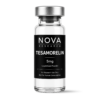
Tesamorelin
£29.99 -

Isopropyl Alcohol Pads
£1.99